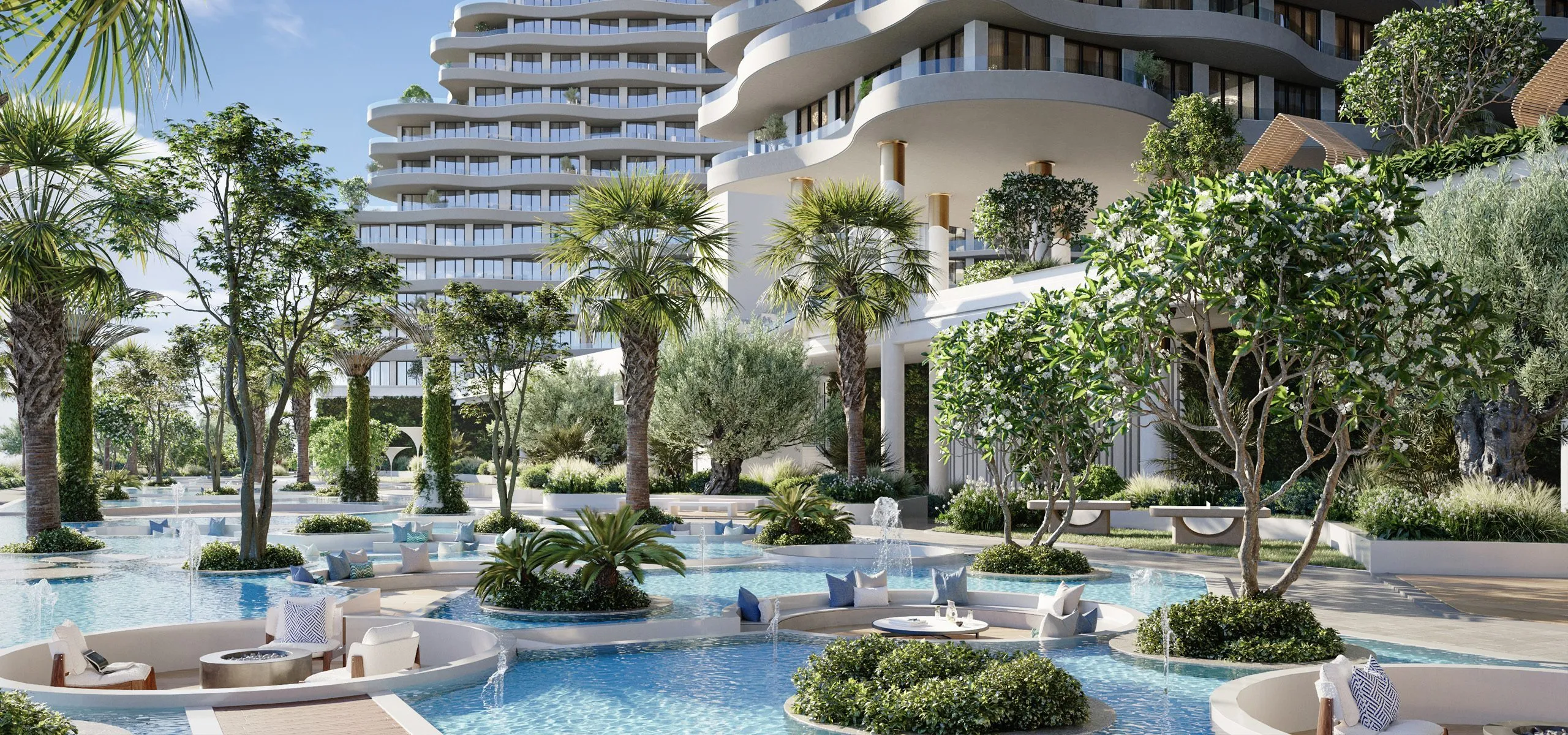

Off-plan property — purchasing a property before it is built — accounts for over 60% of all residential transactions in Dubai. This dominance reflects a market structure unique to the UAE: developers fund construction largely through buyer payments rather than bank debt, creating a system where buyers get favourable payment plans and developers get construction capital without high interest costs. Done well, it works for everyone.
How off-plan payment plans work
The standard Dubai off-plan payment plan structure is a split between payments during construction and a final payment on handover. The most common structures are:
- 60/40: 60% during construction, 40% on handover
- 70/30: 70% during construction, 30% on handover
- Post-handover extension: Many developers now offer a 3-year extension on the handover payment — effectively reducing the immediate cash requirement to 30–40% of purchase price
The post-handover extension has become a key differentiator in 2025–2026. Developers including Ellington, Source of Fate, and Meraas all offer 60/40 with 3-year post-handover options — meaning a buyer can complete a purchase with 30–40% of total value paid over the construction period, then finance or sell the remaining balance after handover.
Best areas for off-plan investment in 2026
Downtown Dubai remains the most liquid prime address. New freehold supply is extremely limited. Binghatti Skyblade (from AED 1.6M) and Deyaar Downtown Residences (from AED 1.8M) are the current GRAF recommendations in this district.
Al Marjan Island, RAK is the market with the strongest near-term catalyst. The Wynn Casino opening in 2027 is expected to drive significant further appreciation. Miraggio (from AED 1.2M) and Costa Mare (from AED 3.9M) are GRAF's current RAK recommendations.
Jumeirah Islands / JVC — Ellington Eltiera Heights (from AED 2.4M) offers design-led living in an established mid-market community with strong rental demand.
Meydan / MBR City — Eaton Square (from AED 42M) and Sobha The S (from AED 23M) represent the ultra-premium end of this corridor, which is maturing rapidly.
Palm Jumeirah — Beyond Passo (from AED 5.5M) is the current off-plan entry point for Palm Jumeirah exposure.
ROI expectations: what the data shows
Off-plan investments in Dubai have historically generated returns through three mechanisms: capital appreciation during the build period (often 10–25%), the discount to secondary market pricing at launch (typically 5–15%), and rental yield post-handover (4–8% gross depending on area and unit type).
The strongest performing segment over 2022–2025 has been mid-luxury (AED 2M–5M) in supply-constrained locations. Ellington and Meraas projects in this bracket have consistently outperformed.
RERA protection: what safeguards you
Dubai's off-plan market is regulated by RERA (the Real Estate Regulatory Authority), which requires all off-plan developers to hold buyer payments in an escrow account managed by an approved bank. Funds are released to the developer only against verified construction milestones. In May 2026, RERA tightened these requirements further — see our detailed coverage here.
This means that even if a developer faces financial difficulties, your paid amounts are protected in escrow and cannot be used for anything other than your specific project's construction.
Common mistakes to avoid
- Buying from an unknown developer: Stick to developers with at least one completed and delivered project in Dubai
- Ignoring the payment plan structure: Ensure you can fund all milestone payments through the construction period
- Focusing only on price/sqft: Location, developer quality, and payment plan structure all affect total return
- Not having an exit strategy: Know whether you plan to sell before handover, rent post-handover, or hold long-term — each requires a different buying approach
GRAF advisors help investors identify the right project, structure their purchase, and plan their exit — free of charge. We are paid by developers, not buyers. Start a conversation today.